How Thick is Cardboard and Recommendations?
Cardboard thickness sounds simple. But it decides if your product arrives safe or broken. That is why cardboard thickness matters so much for any business. For all that ships or displays products. Choose the wrong thickness and you can waste money on bulk you don’t need, or compromise your products.

Cardboard thickness sounds simple. But it decides if your product arrives safe or broken.
That is why cardboard thickness matters so much for any business. For all that ships or displays products. Choose the wrong thickness and you can waste money on bulk you don’t need, or compromise your products.
This guide walks through every part of cardboard thickness in plain, easy words.
What Does Cardboard Thickness Mean?
Cardboard thickness is the depth of the material. It is not the same as weight.
Thickness tells you how deep the board is. Weight tells you how heavy it is. A thin sheet can still be dense and heavy. Much like thick paper and thin paper can weigh the same in some cases.
Thickness is usually shown in millimeters, inches, or points. More layers inside the board mean more thickness and strength.
How Is Cardboard Thickness Measured?
There are four ways to measure the thickness of cardboard. Each one fits a different use.
|
Unit |
What It Means |
Common Use |
|
Points (Pt) |
1 point equals 0.001 inch |
Commercial paper grading |
|
Inches |
Standard US measurement |
Retail and shipping specs |
|
Millimeters (mm) |
Global standard unit |
Packaging and printing |
|
GSM |
Grams per square meter |
Weight and density grading |
A cardboard sheet at 15 points equals about 0.015 inches. Or close to 0.38mm. Knowing these conversions helps when working with suppliers.
Tools Used to Measure Cardboard
Packaging teams use simple tools to check board thickness before production:
- A digital caliper clamps around the sheet and shows an exact reading.
- A micrometer screw gauge gives high precision for detailed checks.
- A thickness gauge holds the sheet between a spindle and anvil.
- Stack and ruler method stack several sheets, measure, then divide by the count.
Corrugated Cardboard vs Regular Cardboard
People mix up these two terms. They are not the same.
- Regular cardboard is a single flat layer. It is thin, smooth, and used for cereal boxes or small retail cartons.
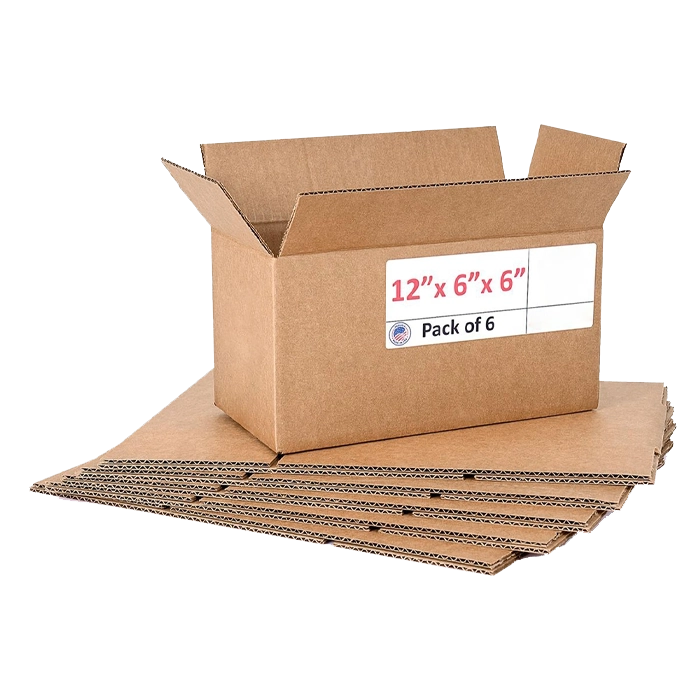
- Corrugated cardboard has a wavy fluted layer glued between two flat liners. This fluting adds strength and cushioning.
If you are shipping a product, corrugated is almost always the safer pick.

Flute Types and Their Thickness
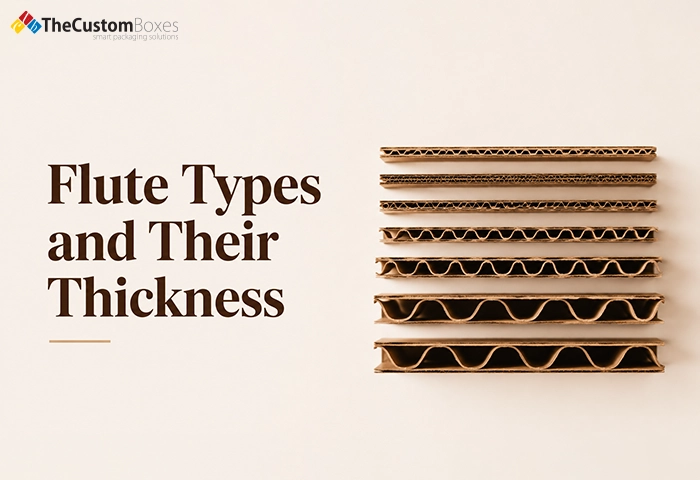
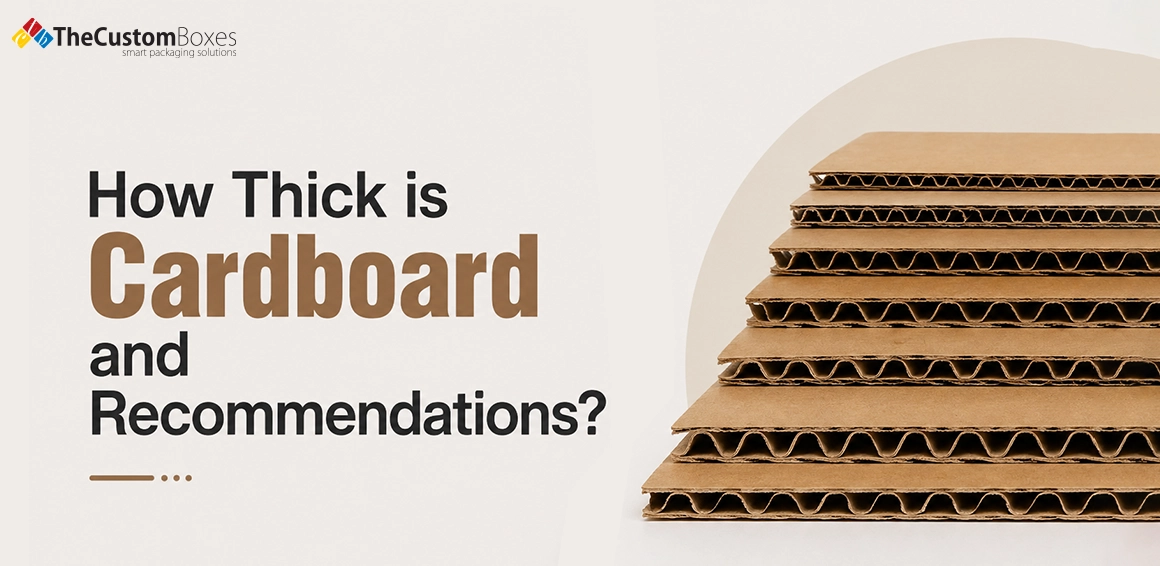
The flute is the wavy inner layer inside corrugated cardboard. Flute size decides how thick and how strong the board is.
|
Flute Type |
~Thickness |
Best For |
|
A-Flute |
4.5mm to 5mm |
Maximum cushioning, fragile items |
|
C-Flute |
3.5mm to 4mm |
Standard shipping boxes, most common type |
|
B-Flute |
2.5mm to 3mm |
E-commerce mailers, crush resistance |
|
E-Flute |
1.2mm to 1.6mm |
Retail cartons, cosmetic boxes |
|
F-Flute |
Under 1mm |
Premium lightweight boxes, fast food packaging |
The C-flute remains the industry favorite. Because it balances strength, thickness, and printability for shipping needs.
Wall Types: Single, Double, and Triple
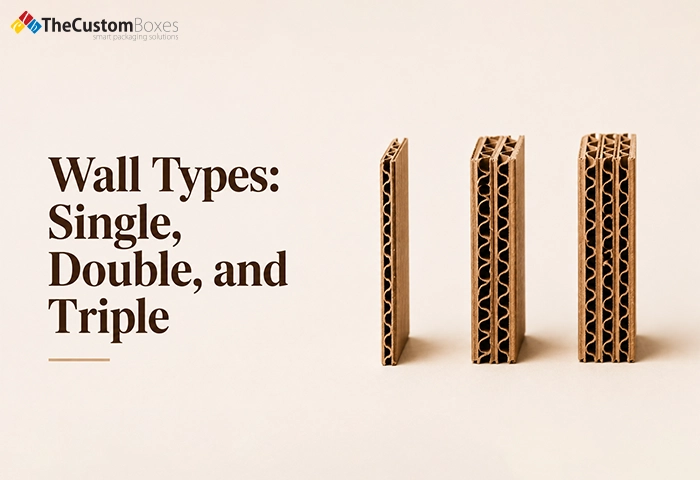
Corrugated board also comes in different wall counts. More walls mean more thickness and protection.
- The single wall board consists of only one fluted layer surrounded by two liners. Its thickness generally ranges between 1/16" and 1/8". It can be used for making book boxes, clothing boxes, and light electronics boxes.
- Two fluted layers with three liners make up the double wall board, having its thickness ranging between 1/8" and 3/16". Glassware, ceramics, and machine parts are made with this board.
- Three fluted layers along with four liners make the triple wall board which can have more than 3/16" thickness & is used for heavy machinery & industrial loads.
Single-wall board remains the most used option across the industry. It held close to 65% of the corrugated board packaging market share in 2025, according to GMI Insights. Since most everyday shipments do not need extra bulk.
Edge Crush Test (ECT) Ratings
Thickness alone is not the whole story. The Edge Crush Test (ECT) quantifies the stack strength that a box can bear up to before it collapses.
- 32 ECT standard rating for most shipping boxes.
- 44 ECT stronger option for heavier or stacked goods.
- 200# or 275# test is an older rating system, still used for heavy-duty boxes.
A box with the right thickness but a low ECT rating can still fail under stacked weight. Always check both numbers together.
How Much Does Cardboard Weigh?
Weight and thickness work together, but they are not identical.
- Single-wall corrugated board weighs close to 0.69 pounds per square foot on average.
- Double-wall corrugated board can reach up to 1.03 pounds per square foot.
Heavier board usually means thicker board. But GSM plays a role too, since two boards of the same thickness can still carry different weights.
Recommended Cardboard Thickness by Use
|
Use Case |
Recommended Option |
|
Cosmetics, small gifts |
E-flute or F-flute and thin single-wall |
|
Clothing, accessories |
Single-wall, C-flute or B-flute |
|
Glassware, electronics |
Double-wall, 44 ECT or higher |
|
Furniture, machinery |
Triple-wall and heavy-duty rating |
|
Crafts and DIY projects |
Thin single-wall and 1/16 to 1/8 inch |
This range covers almost every packaging need, from a small candle box to a large appliance carton.
Thick Cardboard vs Thin Cardboard
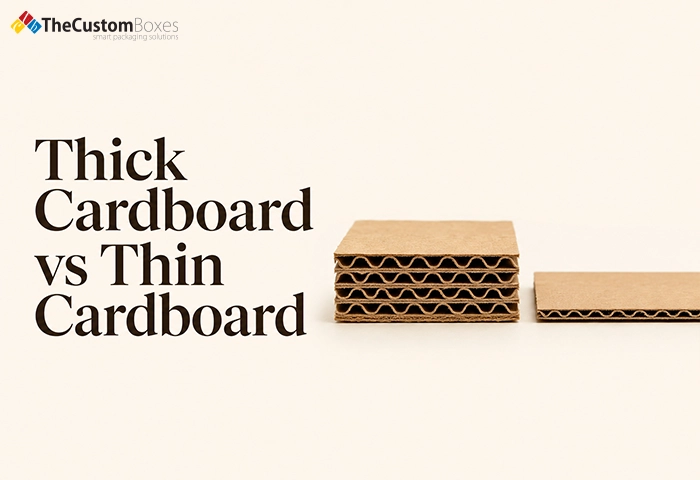
Both options have a place. It depends on what you are packing.
- Thick cardboard is more robust and tougher. It is ideal for expensive or brittle items. It is more expensive to purchase. Also, it increases weight for shipping.
- Thin cardboard is cheap and light. It is easy to cut, fold, bend or glue into many shapes. And also it is unsuitable for heavy and fragile goods.
Why Getting Right Cardboard Thickness Matters
A box that is too thin bends, tears, or fails. A box that is too thick adds cost without real benefit.
The corrugated packaging industry continues to grow fast, with the North America market alone reaching close to USD 28.19 billion in 2025, according to Fortune Business Insights. That growth is pushing more suppliers toward efficient, right-sized board rather than automatically thicker board.
At The Custom Boxes, we help businesses match the correct cardboard gauge to their exact product, so nothing is left to guesswork.
A Quick Note on Printing and Sustainability
Board thickness also affects how your design looks. Thin, smooth paperboard prints crisp, high-resolution graphics. Thick corrugated board can show faint ridge lines from the fluting underneath.
Sustainability also counts. The industry organization FEFCO revealed that around 90% of corrugated cardboard in Europe already contains some recycled content, and the use of recycled fiber can achieve a reduction in greenhouse gas equivalent emissions of up to 70% over virgin material. Taking a considered approach to thickness, not just making it thicker, helps here.
How to Choose the Thickness Right
A few simple questions make the decision easier:
- How heavy is the product?
- How fragile is it?
- How far will it travel?
- Will boxes be stacked in storage?
- What does the budget allow?
Answering these gives you a clear starting point before you even look at a flute chart.
Conclusion
Cardboard thickness does not have to be trial-and-error. It relies on your product, shipping preference, and price range. Once you are aware of the flute type, wall quantity, and ECT rating, selecting the proper corrugated cardboard thickness becomes easy.
Whether you need a few layers or several, lightweight packaging for little gifts or a substantial board for machinery items, the points discussed are necessary to help make a decision you feel comfortable with.
Contact The Custom Boxes USA today for a free quote. Let us help you create packaging that can protect both your product and business.
Frequently Asked Questions
How thick is standard cardboard?
Standard cardboard thickness varies by material and use. Paperboard is often measured in points or millimeters, while corrugated cardboard commonly ranges from about 1 mm to more than 5 mm depending on the flute and wall type.
What is the best cardboard thickness for shipping boxes?
For most everyday shipping boxes, B-flute or C-flute single-wall corrugated cardboard provides a good balance of strength, cushioning, weight, and cost. Heavier or fragile products may require double-wall or higher ECT-rated board.
Is thicker cardboard always stronger?
No. Thickness alone does not determine strength. Flute type, wall construction, material weight, and ECT rating also affect how well a box resists crushing and stacking pressure.
What cardboard thickness should I use for fragile products?
Fragile products such as glassware and electronics generally benefit from double-wall corrugated cardboard with a higher ECT rating. The exact specification depends on the product weight, dimensions, shipping conditions, and stacking requirements.
What is the difference between cardboard thickness and GSM?
Thickness measures the depth of the cardboard, usually in millimeters, inches, or points. GSM measures the weight of the material per square meter. A thicker board is not necessarily heavier, so both specifications should be considered when selecting packaging.
Premier American Manufacturer of Packaging and Custom Boxes
Experience the ease of creating and ordering custom boxes and affordable packaging online with the Custom Boxes. Contact us today to discover how we can turn your packaging vision into a reality.

Payment & Security
 No Hidden Charges
 Money Back Guarantee
thecustomboxes.com online guarantee the privacy of all the customers and never share their personal information with third parties. For more details read our Privacy Policy.







you might also like