What Printing Methods Are Used for Custom Boxes?
Custom boxes printed the right way, sharp colors, clean logos, and finishes. All that hold up from production to shelf.

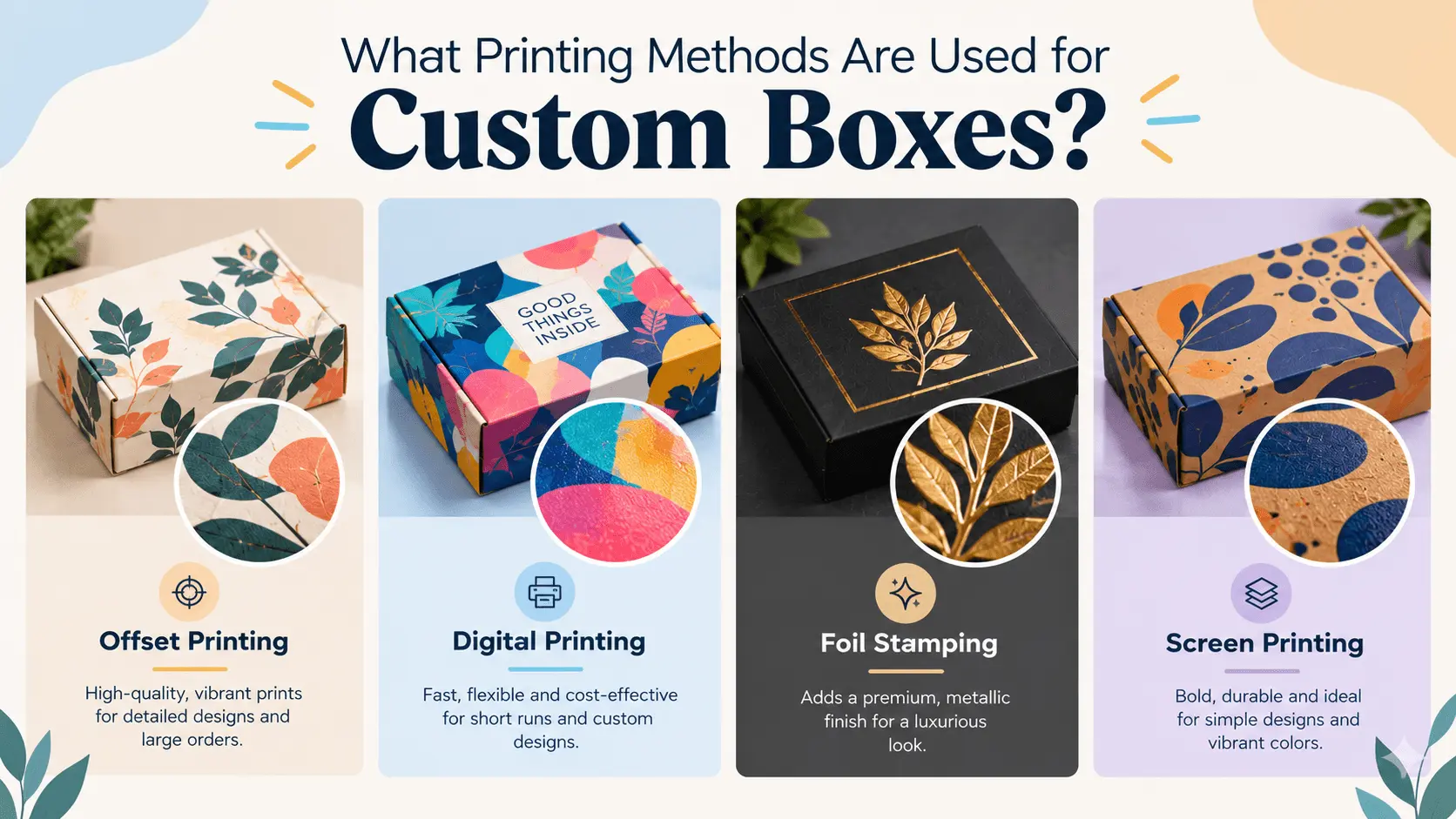
Not every box gets printed the same way. The method behind the print actually shapes how sharp your logo looks. Also, how much a run costs and how fast it gets made.
Understanding the different printing methods for custom boxes helps you avoid overpaying for a run that didn't need premium color accuracy, or underspending on packaging that needed it. This guide breaks down each method. What it's good for and how to pick the right one for your product.
Why Printing Method Actually Matters
A lot of brands assume printing is printing. But that's not quite true. Each method handles color, detail, and material differently. And picking the wrong one can mean blurry logos or a bill way higher than it needed to be.
Getting this right early saves money and avoids a reprint down the line.
Digital Printing For Custom Boxes
Digital printing works well for shorter runs and designs with a lot of detail. Like photography, gradients, or complex artwork. There's no printing plate involved. So the setup cost stays low.
This method suits:
- Small batch orders under a few thousand units.
- Designs needing full-color photography or gradients.
- Brands wanting fast turnaround without plate setup delays.
- Frequent design changes across different product lines.
Digital printing costs a bit more per unit at high volumes. But only for smaller runs. It's often the most cost-effective option available.
Offset Printing for Sharp And Consistent Color
Offset printing remains the go-to choice when color accuracy matters most. It uses printing plates to transfer ink. This gives noticeably crisper detail and more consistent color across large runs.
A 2024 packaging industry report found that offset printing delivers color accuracy within a 2 to 3% variance across large production runs. All of this compared to a wider variance seen in some digital print processes at scale.
This method works best for:
- Large bulk orders where cost per unit matters.
- Brands needing exact Pantone color matching.
- Premium packaging where print quality is non-negotiable.
- Long-term product lines with consistent branding.


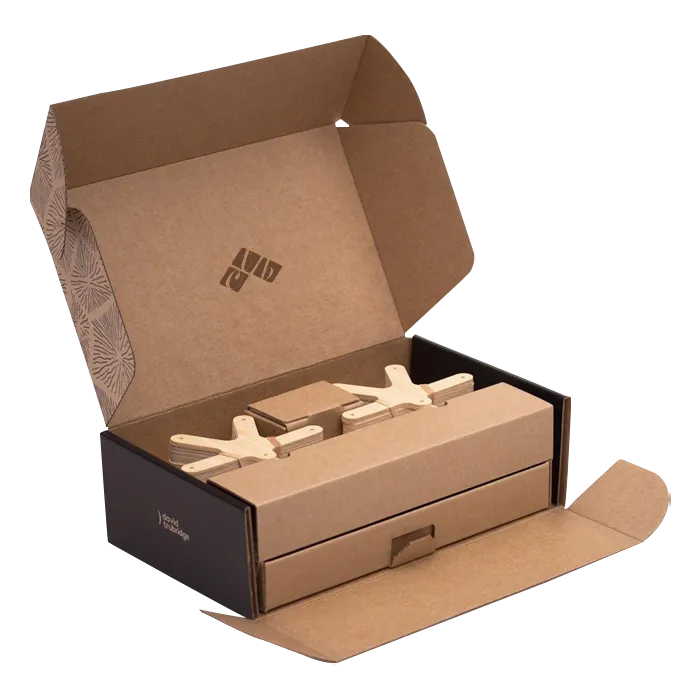

Flexographic Printing for Speed and Scale
Flexographic printing, often just called flexo. It uses flexible printing plates and moves fast. It's the standard choice for large corrugated boxes and bulk shipping cartons where speed and cost efficiency matter more than fine detail.
This method suits:
- Large corrugated shipping boxes.
- High-volume orders needing fast turnaround.
- Simple designs with solid colors or basic logos.
- Cost-sensitive bulk packaging runs.
Flexo doesn't handle fine detail as well as digital or offset. But for straightforward branding on shipping boxes. It gets the job done quickly and affordably.
Screen Printing for Bold And Simple Designs
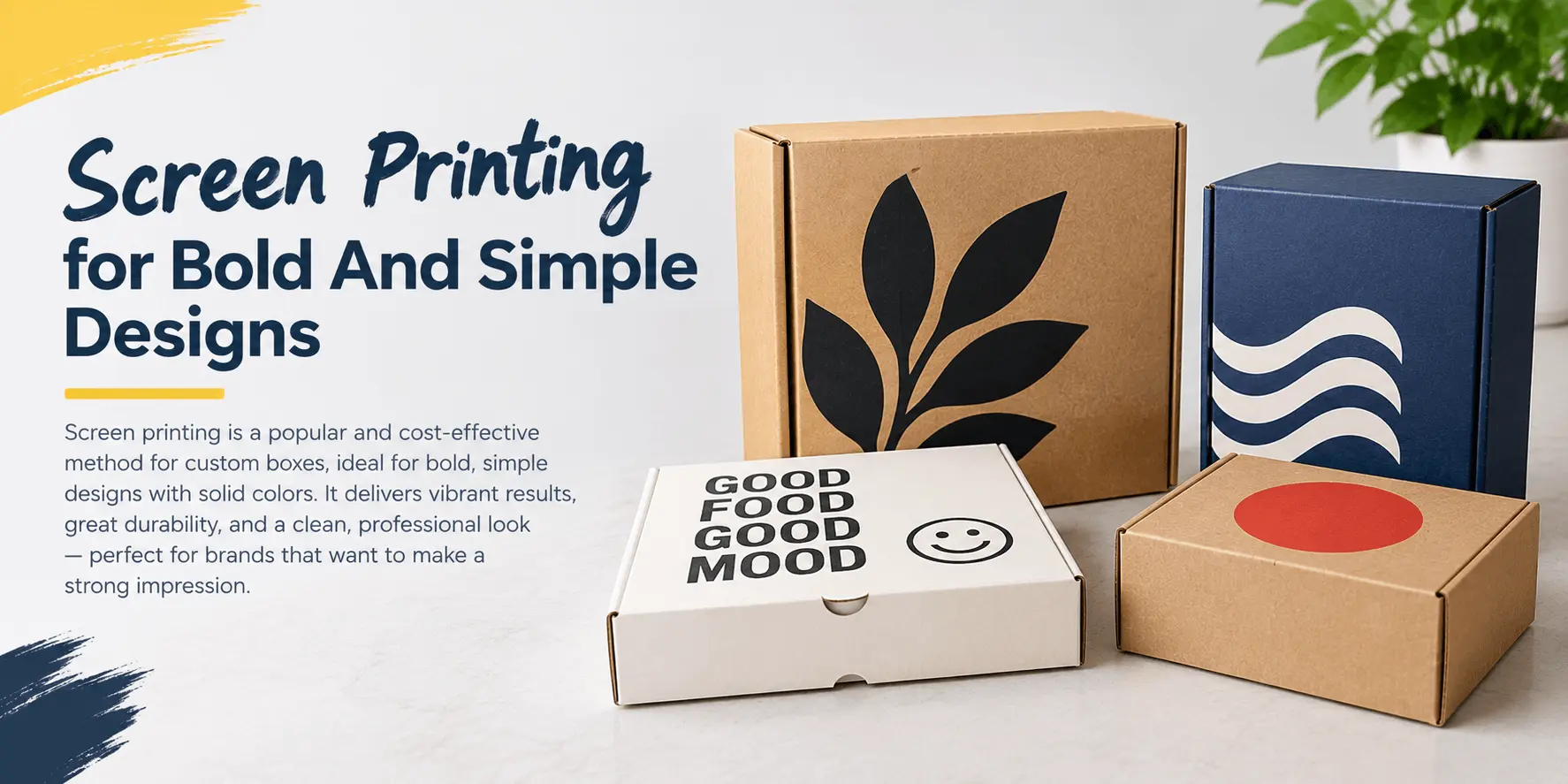
Screen printing pushes ink through a mesh stencil onto the box surface. It's less common for full-color designs. But it works well for bold and simple graphics that need to stand out.
Best for:
- Single or two-color logo designs.
- Rigid boxes and specialty packaging materials
- Designs needing strong, opaque ink coverage.
- Smaller runs where setup cost isn't a major factor.
Comparing the Main Printing Methods
The following is a quick side-by-side look at how these methods stack up:
|
Printing Method |
Best For |
Run Size |
|
Digital printing |
Detailed, full-color designs |
Small to medium |
|
Offset printing |
Precise color matching |
Medium to large |
|
Flexographic printing |
Fast, large corrugated runs |
Large bulk orders |
|
Screen printing |
Bold, simple graphics |
Small to medium |
How Material Affects Printing Method
Typically, the box material will help eliminate many of the printing methods that don't make sense. Smooth SBS coated paperboard suits offset and digital printing perfectly. Corrugated cardboard lends itself to being printed with flexographic printing.
Choosing the right media for the appropriate method prevents problems such as faded print or ink that doesn't adhere properly.
What Finishing Adds After Printing
The package is not the only story. Post-printing finishes impact the final box appearance and touch on the shelf or in your customer's hand.
- Matt lamination for a softer, more upscale product.
- Gloss lamination for a bright, rich color punch.
- Spot UV for gloss on logos or other selected areas. Foil stamping for a metallic flourish.
These finishes work on top of any printing method. They add another layer of polish once the base print is done.
Choosing The Right Method For Your Order
A few quick questions help narrow down the right choice:
- How many units are you ordering?
- Does your design need photography or gradients?
- Is exact color matching important for your brand?
- What material is your box made from?
Answering these upfront saves time when getting quotes from a reliable supplier like The Custom boxes.
Why The Custom Boxes USA Gets This Right
The Custom Boxes works across all four major printing methods, matching the right process to each order instead of pushing one default option regardless of fit. That means smaller brands get cost-effective digital runs. While bulk orders get the color consistency of offset printing delivered.
Free digital proofs are available before production starts, so print quality gets confirmed before a full run goes ahead.
Final Words
Picking the appropriate printing process depends upon the quantity you wish to acquire, the style you're using, and the total cost. Digital, flexo, publish, as well as offset printing all serve various uses, and each has its very own price-benefit analysis. Make the wrong choice, and you can end up with more costly solutions or see your order not lasting long enough to be worthwhile.
We help brands choose the right printing method for their custom boxes. Whether that's a small digital run or a large offset production order. Ready to get your packaging printed right? Contact us for a free quote.
Frequently Asked Questions
- What's the best printing method for small custom box orders?
Digital printing works best for small runs, since it avoids plate setup costs entirely. - Why does offset printing cost more than digital for small orders?
Offset requires printing plates, which adds upfront cost that only pays off at higher volumes. - Can flexographic printing handle detailed and full-color designs?
Not as well as digital or offset. It's better suited to bold, simple graphics on corrugated boxes. - Does the box material limit which printing method I can use?
Yes, smooth paperboard suits digital and offset, while textured corrugated works better with flexo. - Can I combine printing with finishes like foil stamping?
Yes, finishes like foil, matte, or gloss lamination are applied after printing on any method.
Premier American Manufacturer of Packaging and Custom Boxes
Experience the ease of creating and ordering custom boxes and affordable packaging online with the Custom Boxes. Contact us today to discover how we can turn your packaging vision into a reality.

Payment & Security
 No Hidden Charges
 Money Back Guarantee
thecustomboxes.com online guarantee the privacy of all the customers and never share their personal information with third parties. For more details read our Privacy Policy.