What is GSM paper? Detailed Guide
A GSM paper is a popular printing and packaging term. Many people see these numbers, 90 GSM, 250 GSM, or 350 GSM, and they are not aware of what they signify.

A GSM paper is a popular printing and packaging term. Many people see these numbers, 90 GSM, 250 GSM, or 350 GSM, and they are not aware of what they signify. Having the GSM meaning on paper will equip the businesses with the right material for doing the printing and packing projects.
The packaging business is also expanding rapidly. Statista expresses the view that the packaging market worldwide can attain up to 1.4 trillion in the year 2027 as brands invest more in impactful and sustainable packaging materials.
Knowledge of the weight of paper GSM assists companies in making a better decision. It keeps the products safe during shipping and presentable on shelves in the stores.
This guide gives an explanation of how GSM is calculated and measured and which type of GSM to use when printing and packaging.
What Does "GSM" Mean in Paper?
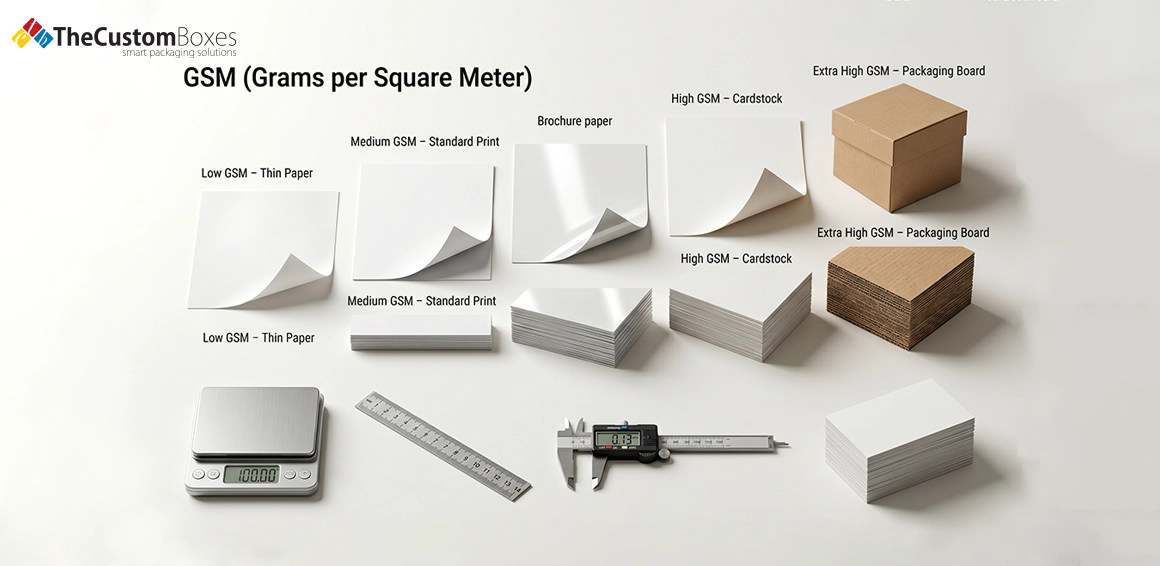
The full abbreviation of the word "GSM" means "gram per square meter." It describes the weight of the paper in some universal unit of measurement. The manufacturers stipulate the grams per square meter of paper. When a sheet has a weight of 100 grams/m², then that sheet has a weight of 100 GSM.
This system gives the printing companies and packaging manufacturers an easy way to compare the paper materials.
An example of this is a piece of paper with a GSM of 80, which is light and flexible. The paper of 200 GSM is much tougher. Packaging boards can be of heavy weight up to 350 GSM.
How is GSM Calculated?
Manufacturers measure GSM paper weight using a simple process.
- They cut a paper sample measuring exactly one square meter.
- Next, they weigh that sheet using a precise digital scale.
- The GSM value takes the form of the weight in grams.
The process enables the manufacturers to come up with uniform materials. This simple method makes GSM the most reliable way to compare paper weights globally.
Difference Between GSM and Paper Thickness
Many people believe GSM always equals thickness. Paper thickness (GSM) is, however, not always equal to the weight.
Paper weight is measured using GSM, and thickness is based on the density of the paper. "Density" is a term used to describe the tightness of paper fibers. A thick sheet can be thinner if it has a high GSM.
As an example, the paper cover may be much smoother and a little thinner. Nevertheless, it is able to possess the same or greater GSM as uncoated paper. This variation can be very confusing to new buyers.
How is GSM measured?
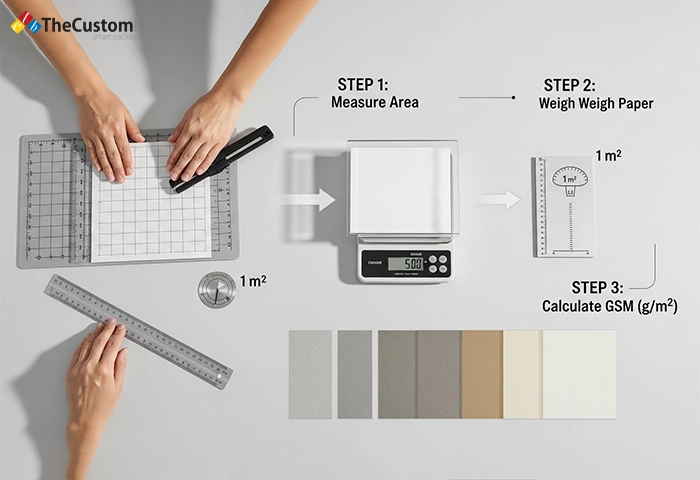
GSM measures paper weight over a specific area.
Here is the formula.
GSM = W / A
Where:
W = weight of paper
A = area of paper (m²)
- Standard Testing Methods
Paper mills measure GSM using international standards like ISO and TAPPI. A paper sample with a fixed area is cut and weighed using a precision scale. Controlled temperature and humidity ensure accurate paper weight GSM results.
- GSM vs. Basis Weight (US vs. International Measurement)
Most countries use the GSM, the unit for measuring the paper weight. The basis weight is commonly applied in the United States and is the amount of weight of 500 sheets of paper in pounds. Because sheet sizes differ, GSM provides a clearer global comparison.
- Conversion Chart (GSM to lbs)
Paper buyers often convert GSM into pounds when working with US printing standards. Below is a simple comparison chart used in the printing and packaging industry.
|
GSM |
Approx. Pound Weight (lb Cover) |
Common Use |
|
90 GSM |
~24 lb bond |
Standard printer paper |
|
170 GSM |
~65 lb cover |
Flyers and brochures |
|
250 GSM |
~92 lb cover |
Postcards and folders |
|
300 GSM |
~110–115 lb cover |
Business cards |
|
350 GSM |
~130 lb cover |
Premium packaging |



GSM Paper Chart
|
GSM Range |
Paper Type |
Common Uses |
|
35–55 GSM |
Tissue Paper |
Tissue paper, napkins, toilet paper, and protective wrapping sheets |
|
70–100 GSM |
Standard Office Paper |
Printer paper, copy paper, notebooks, and everyday office printing |
|
120–170 GSM |
Flyers & Brochures |
Flyers, brochures, magazine pages, posters, and marketing leaflets |
|
200–300 GSM |
Postcards & Light Packaging |
Postcards, greeting cards, product tags, and lightweight retail packaging |
|
300–400+ GSM |
Premium Packaging & Rigid Boxes |
Business cards, luxury packaging boxes, premium invitations, and rigid box covers |
Why GSM Matters in Packaging & Printing
GSM is significant to the performance of printing and packaging. The weight of paper influences durability, print quality, folding capability, and protection of the product.
- Higher GSM paper usually provides a stronger structure. This strength helps custom packaging boxes protect products during shipping.
- Lower GSM paper works well for documents or lightweight printing.
Smithers Packaging Research argues that the premium packaging demand grew by over 6 percent in the years following 2022 due to the desire by brands to have stronger packaging materials and better visual appearance.
Due to this trend, paper weight (GSM) is a carefully selected aspect by many businesses due to the ability to strike a balance between durability, cost, and appearance.
- Product Protection Strength
The packaging should ensure that products are not damaged during storage and transportation. Higher GSM paper provides a stronger structure and reduces product damage. This strength helps businesses maintain product quality.
- Print Quality & Ink Absorption
The weight of paper influences the printing performance. Thick paper tends to take in ink better and does not smudge. Such a feature results in more vivid colors and images.
- Folding Durability
Packaging materials often require folding during production. Medium GSM paper allows clean folds without cracking. This balance between flexibility and strength improves packaging quality.
- Shipping Performance
Lightweight paper reduces shipping costs because it lowers total package weight. However, heavy materials protect products better. Businesses must balance both factors when selecting packaging materials.
- Premium Brand Perception
The initial perception of a product is made by packaging. Thicker packaging is also commonly associated by customers with quality. A Dotcom Distribution study shows 61% of customers feel more excited when receiving products in premium packaging.
Common GSM Used in Different Industries
-
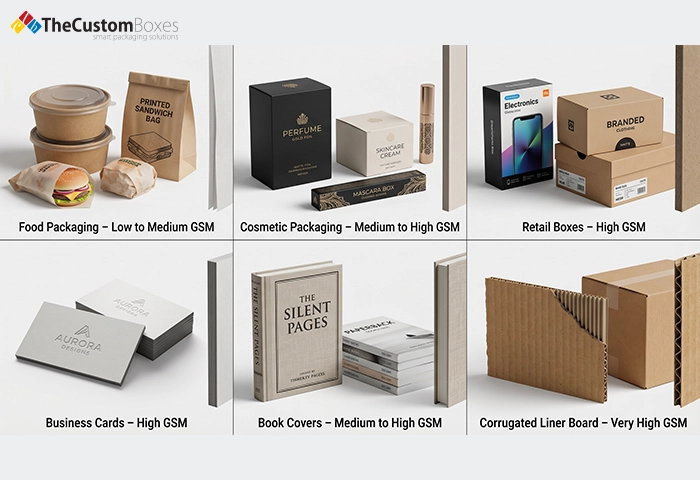
Food Packaging
Food packaging should be able to safeguard foods besides being safe and hygienic. A lot of food boxes utilize paperboard of 200-350 GSM. This is a durable range that is lightweight.
-
Cosmetic Packaging
Cosmetic brands often prefer stronger materials to protect fragile bottles or jars. Many beauty packaging boxes use 300–400 GSM paperboard to create a premium presentation.
-
Retail Boxes
Cardstock within a range of 250 to 350 GSM is normally used in retail packaging. This weight supports strong printing and maintains box shape.
-
Business Cards
Business cards represent brand identity. Many companies choose 300 gsm business card paper because it feels professional and durable.
-
Book Covers
Book covers require stronger materials than internal pages. Publishers often use cardstock between 250 and 300 GSM for cover durability.
-
Corrugated Packaging Liner Boards
Corrugated packaging contains multiple layers of linerboard and fluted medium. These layers often range between 125 and 440 GSM, depending on product weight.
GSM vs. Paper Thickness vs. Microns
- Why GSM Does Not Always Mean Thicker Paper
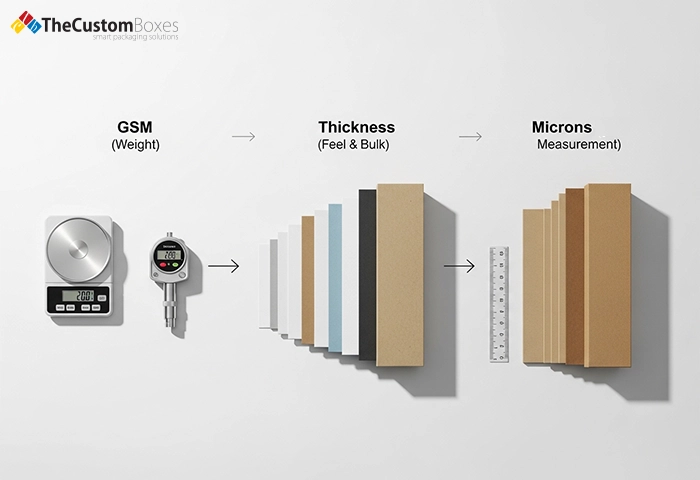
GSM measures weight rather than thickness. Paper thickness depends on fiber density and manufacturing methods. Therefore, two papers may share the same GSM but feel different in thickness.
- Coated Vs. Uncoated Paper Weight Differences
Coated paper includes layers that improve print quality. These coatings add weight but may not greatly increase thickness. Uncoated paper lacks this coating and may feel rougher.
- The Density Factor Is Explained
Paper density refers to how tightly fibers pack together during production. Higher density increases weight without significantly increasing thickness. This factor explains why similar GSM papers may feel different.
How to Choose the Right GSM for Your Project
- For Business Cards
Business cards must be made of strong and heavy materials. Most designers use paper with a 300 to 350 GSM to produce an upscale feel.
- For Brochures
Brochures need to be flexible and also well-printed. The range of materials (130-170 GSM) generally works.
- For Cosmetic Boxes
Cosmetic packaging often requires thicker material to protect fragile products. Many brands use 300–400 GSM paperboard for this purpose.
- For Food Packaging
Food packaging often uses 200–350 GSM materials because they offer durability and safe storage.
- For Shipping Boxes
Shipping boxes often use corrugated board combined with liner papers. These materials provide the strength needed for transportation.
- Include A Decision-Making Checklist
Businesses should evaluate several factors before selecting paper weight. Budget remains an important consideration because thicker paper increases cost. Durability needs also influence the final choice.
Print finish plays a major role since coated papers support higher print quality. Folding requirements determine whether flexible paper is necessary. Finally, luxury perception influences packaging decisions because premium brands often prefer thicker materials.
GSM for Packaging Boxes
-
- Kraft paper GSM
The kraft paper typically falls between 120 and 300 gsm. The packaging material is very eco-friendly, as it contains strong natural fibers. - Cardstock GSM
Cardstock is 200-400 GSM and is used in retail boxes and folding cartons.
- Kraft paper GSM
- Corrugated flute GSM
Corrugated packaging uses multiple paper layers. These layers include liner boards and fluted medium. Combined weight often exceeds 400 GSM to support heavy products.
- Rigid box board weight
Rigid packaging involves the use of thick paperboard, which can be more than 800 GSM. Rigid boxes are usually used by luxury electronic and cosmetic brands.
The Custom Boxes manufactures custom packaging boxes, corrugated boxes, and rigid boxes. We are keen on choosing GSM to improve durability and good appearance.
GSM Paper Types Explained
- Coated Paper GSM
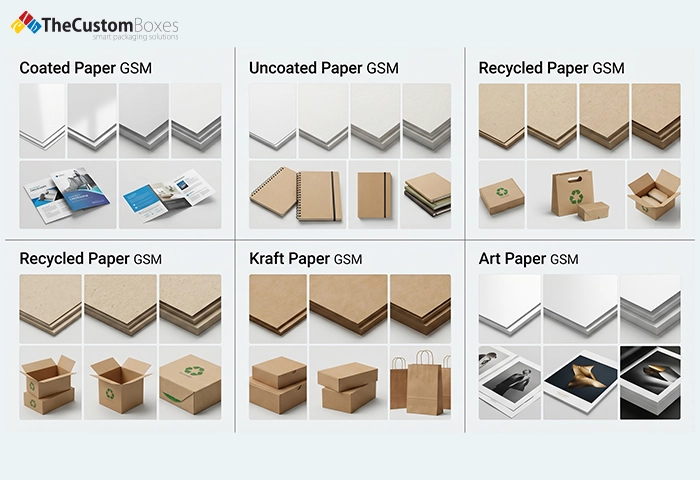
Coated paper includes a smooth layer applied during manufacturing. This coating improves color clarity and printing detail. Magazines and catalogs often use coated paper.
- Uncoated Paper GSM
The paper with no coating on its surface is uncoated. It takes in ink fast and is suitable for books and notebooks.
- Recycled Paper GSM
The recycled paper utilizes the fibers that were used in earlier paper materials. The EPA has reported that approximately 68 percent of the paper materials were recycled in the US in recent years.
- Kraft Paper GSM
Kraft paper provides excellent strength and durability. Many shipping boxes and retail bags use this material.
- Art Paper GSM
Art paper supports high-quality printing. It is frequently utilized by designers in catalogues, posters, and advertising materials.
Advantages of High GSM Paper
High GSM paper provides several advantages for printing and packaging. First, it creates a premium feel that customers notice immediately. Thick paper also improves durability and prevents bending or tearing during handling.
Higher GSM materials also create stronger packaging structures. This strength protects products during shipping and storage. Many luxury brands prefer heavy paper because it communicates quality and value.
Advantages of Low GSM Paper
Low GSM paper remains useful for many applications. It reduces printing costs because manufacturers use less material. Lightweight paper also lowers shipping weight and transportation expenses.
Many publishers use low-GSM paper for books and magazines because it allows large print volumes while controlling cost.
Common Mistakes When Choosing GSM
Businesses sometimes choose paper weight without understanding product needs.
- One common mistake involves confusing thickness with weight.
- Another mistake involves ignoring folding durability when designing packaging.
- Some companies select extremely thick paper even when unnecessary. This choice increases production cost without improving performance.
Matching GSM with product weight and packaging design helps avoid these mistakes.
Need Help Choosing the Right GSM for Your Packaging?
Selecting the appropriate paper weight may not be easy for the majority of businesses. Packaging professionals assist the firms in choosing the materials that suit the product size and shipping requirements as well as the brand image.
The Custom Boxes collaborates with companies in developing strong and attractive packages. Our firm does give advice on the weight of paper used, printing procedures, and wrappings.
Brands can request custom sizes, printing support, and material samples before production. This process ensures packaging meets quality expectations.
Many companies trust our company to produce reliable packaging solutions. Our specialists help brands select the best GSM materials for retail packaging and shipping boxes.
If your brand needs expert packaging guidance, we can help you create strong and professional packaging designs.
Frequently Asked Questions
-
What is the standard GSM for printing paper?
The majority of printing paper ranges between 70 and 100 GSM. Additionally, numerous offices would like to use 80 GSM paper due to its printability and ability to pass through most printers without problems.
-
Is 300 GSM paper thick?
Yes, 300 GSM is rather thick and tough paper. It is commonly applied on quality goods like postcards, invitations, and quality business cards.
-
Which GSM is best for packaging boxes?
Particularly, the packaging boxes are done with 250-400 GSM paperboard. This range is also good strength-wise and durable. The weight would vary depending on the product and the box design.
-
What GSM is used for business cards?
The majority of business cards that are made by professionals have 300 to 350 GSM cardstock. This weight is solid and strong; thus, it makes it easy to create a strong first impression.
-
Is higher GSM always better?
Not always. The thicker and stronger GSM paper is also more expensive. Lower GSM paper is usually suitable in light printing jobs.
-
How can I convert GSM to pounds?
The cover stock of 300 GSM, as an example, has a weight of about 110-130 lb (this is dependent on the type of paper).
Premier American Manufacturer of Packaging and Custom Boxes
Experience the ease of creating and ordering custom boxes and affordable packaging online with the Custom Boxes. Contact us today to discover how we can turn your packaging vision into a reality.

Payment & Security
 No Hidden Charges
 Money Back Guarantee
thecustomboxes.com online guarantee the privacy of all the customers and never share their personal information with third parties. For more details read our Privacy Policy.