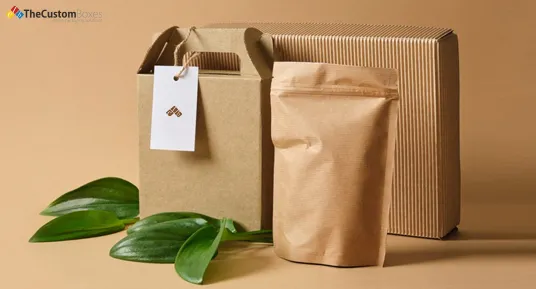
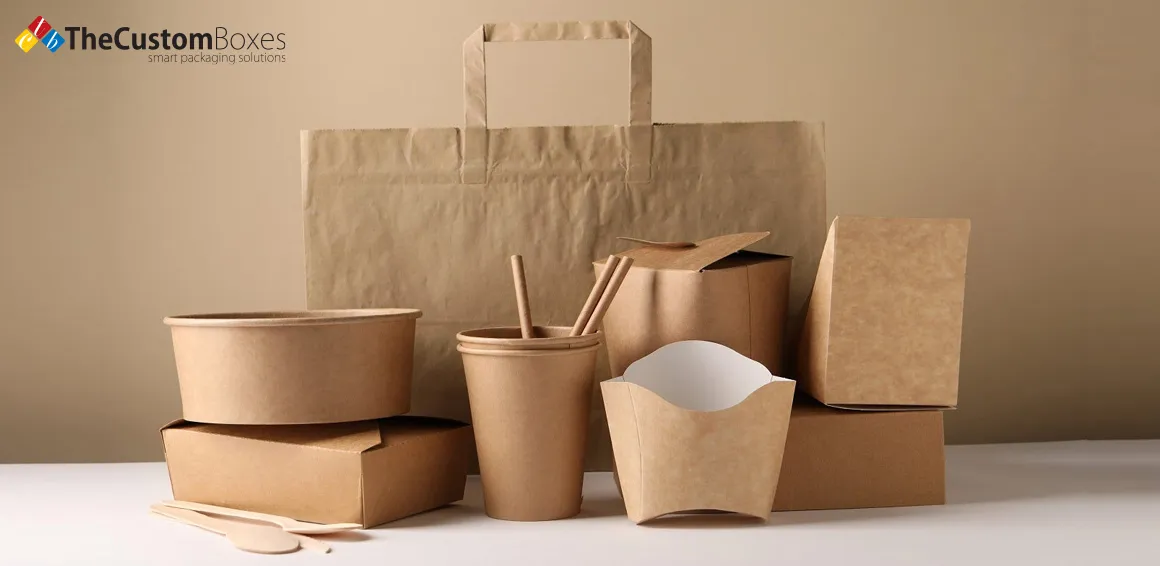
How to Make Packaging More Sustainable in 2026
Determine how 2026 businesses can adopt the use of sustainable packaging systems through the utilization of eco-friendly packaging materials, recyclable packaging material, and biodegradable packaging materials. Identify trends, certifications and cost saving measures, create trust and create brands.

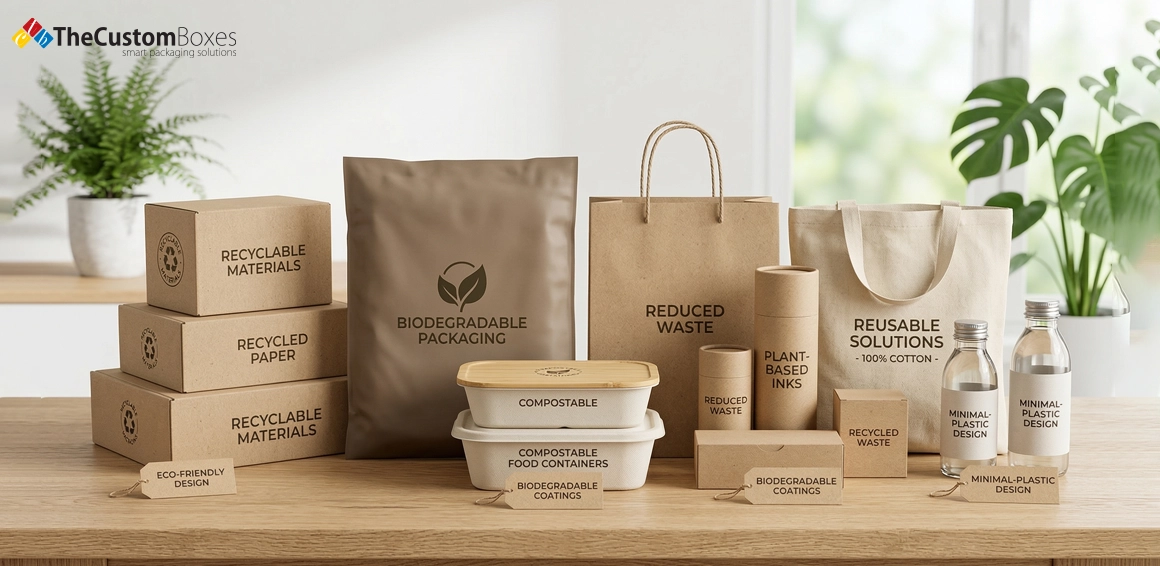
Packaging is what a customer sees first and what they base their perception of the product on. The packaging is not only about designing in 2026 but also about responsibility. Environmentally friendly packaging is no longer just a necessity in any business. U.S. consumers are requiring environmentally friendly packaging materials that will help reduce waste and safeguard the environment. They desire that the brands should be environmentally considerate.
Meanwhile, regulators are compelling businesses to comply with tough regulations and report on ESG objectives. The way recyclable packaging and biodegradable packaging options can transform customer trust has been experienced in our company.
Companies which have embraced sustainable design of packaging are not only cutting costs, but are also developing better reputations. In the current blog, the reasons behind the necessity of packaging change, current trends defining 2026, and the measures that companies can adopt will be discussed.
You will get to know a vivid roadmap to make packaging more sustainable.
What Is Sustainable Packaging?
Sustainable packaging refers to the act of designing in a manner that serves the current needs without injuring the future. It is described by the United States Environmental Protection Agency (EPA) as a loading that has a smaller environmental impact throughout its lifecycle.
In this lifecycle perspective, there are cradle-to-grave (production to disposal) and cradle-to-cradle (reuse of materials indefinitely). The idea is to ensure that packaging is reused in the circular economy.
The most important principles are the following:
- Minimize the materials to decrease waste.
- Use packaging where possible.
- Recycle so that resources are not wasted.
- Utilize waste streams to generate energy.
- Restructure of efficiency and sustainability.
The EPA defines sustainable packaging as one that has a minimal impact on the environment throughout the lifecycle of the packaging. It is steered by the principles of reduce, reuse, recycle, recover, and redesign. This ensures that the packaging accommodates the model of the circular economy of packaging to be environmentally responsible in the long run.
Why Sustainable Packaging Matters in the U.S. in 2026
- Consumer Behavior Trends
By the year 2026, people will desire having their shopping materials packed without using plastic. This change is being overtaken by Gen Z and Millennials. They would rather have the environmentally-friendly packaging that would be relevant to their values. Most people will be ready to pay higher prices for brands with biodegradable packaging alternatives and recycled cardboard packaging.
- U.S. Regulations & Compliance
States are embracing the Extended Producer Responsibility (EPR) law. Plastic bans are expanding. It now needs to enforce more of the FTC Green Guides to preclude greenwashing.
The character of the rules developed by the Federal Trade Commission is that the corporations using environmentally friendly packaging materials should prove their statements.


Step-by-Step Guide to Making Packaging More Sustainable
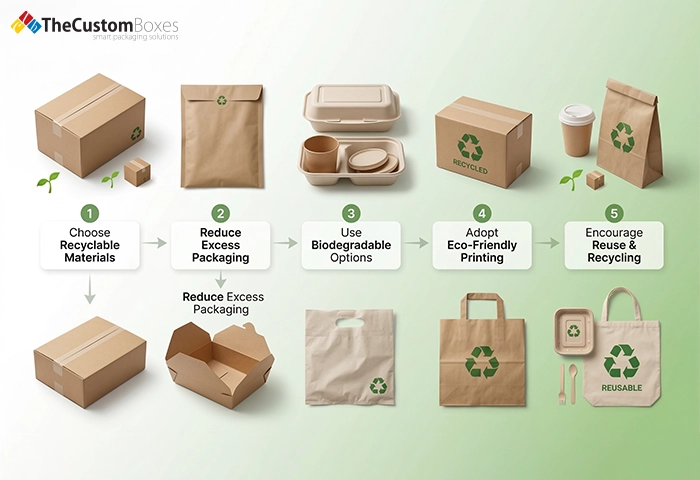
Complete Packaging Sustainability Audit
Start with a full audit. List all materials used. Determine the carbon footprint base. The waste stream is observed in order to understand what goes to landfills. Assess the sustainability practices of the suppliers.
Reduce Material Usage
Light packaging reduces expenditure on shipping. The elimination of redundant layers creates less waste. Redesign performs a structural redesign so that it has stronger boxes with less material. This measure is cost-effective and also promotes sustainable packaging design.
Replacement with Sustainable Materials
- Biodegradable and Compostable Alternatives
PLA biomass is biodegradable. Mushroom packaging is naturally developing, and it is applied instead of foam. They are certified, like BPI, which shows compostability. These biodegradable alternatives to packaging are entering the mainstream in 2026.
- Recyclable Materials
Mono-material packaging is easily recycled. PET and HDPE are recycled to be reused. Such recyclable packaging will reduce pollution in the recycling streams.
- Reusable Packaging Models
Refill programs encourage customers to make use of containers. Reuse: Closed-loop systems do not dispose of the packaging. This goes in favor of circular economy packaging.
Sustainable Packaging Precedents at the Industry Level.
- The businesses of e-commerce are based on mailers that are compostable and recycled cardboard.
- Lightweight and biodegradable wraps are utilized by beverage and food companies.
- The makeup and skincare industries would change disposable jars to refusable ones.
- Pharmaceutical companies use recyclable blister packages.
- The focus of the retail and luxury packaging is FSC-certified paper and reusable boxes that are luxurious.
Sustainable Packaging Certifications That Build Trust
Credibility has been manifested in certifications. FSC ensures decent forestry. BPI Compostable guarantees the certification of compostability. Cradle to cradle is a lifecycle sustainability measure.
Sustainability Packaging Cost in 2026
In the short term, environmentally friendly packaging might be costly. But hidden savings exist. Small designs are economical in shipment costs. Prolonged packaging saves on returns. Tax incentives and grants facilitate the eco initiatives. The long term ROI provides an idea that environmentally friendly packaging materials are a cost reduction strategy that provides brand equity.
Comparison Table: Average Costs in 2026
|
Material Type |
Average Cost |
ROI Potential |
Notes |
|
Recycled cardboard packaging |
Slightly higher |
High |
Lower shipping weight |
|
Biodegradable packaging options |
Moderate |
Medium |
Compostable, consumer appeal |
|
Eco friendly packaging materials |
Varies |
High |
Tax incentives available |
|
Recyclable packaging materials |
Low to moderate |
High |
Easy to integrate |
Common Greenwashing Mistakes to Avoid
False claims of being environmentally friendly should not be made by the brands. Biodegradable products that are not recyclable confuse the consumer. Lack of clarity causes distrust. The danger of compliance with the FTC is great.
Communication should be clear both in regard to recyclable packaging materials and biodegradable packaging materials. The majority of businesses use buzzwords unreasonably, and it is damaging to their reputation.
Nowadays, customers are not only concerned with labels but also with honesty. By not being recyclable, the packaging gives a false impression that it is green. TheCustomBoxes believes that trust and cost reduction of expensive fines are the results of transparency.
Sustainable Packaging Trends for 2026
Optimization of packaging with the help of AI can reduce waste. The QR traceable smart packaging connects the customers with recycling information. Plastic use is replaced by compostable mailers.
Accountability with EPR is increased. The packaging industry under sustainable packaging is shifting towards the use of carbon-neutral packaging in the year 2026. The packaging will be made smarter and more efficient by the use of innovations.
The QR codes will be able to make customers aware of the real time of how to recycle. Compostable mailers are now affordable to small businesses. Carbon-neutral packaging is an indicator of worry for climate goals and targets eco-friendly consumers.
How Small Businesses Can Make Packaging More Sustainable
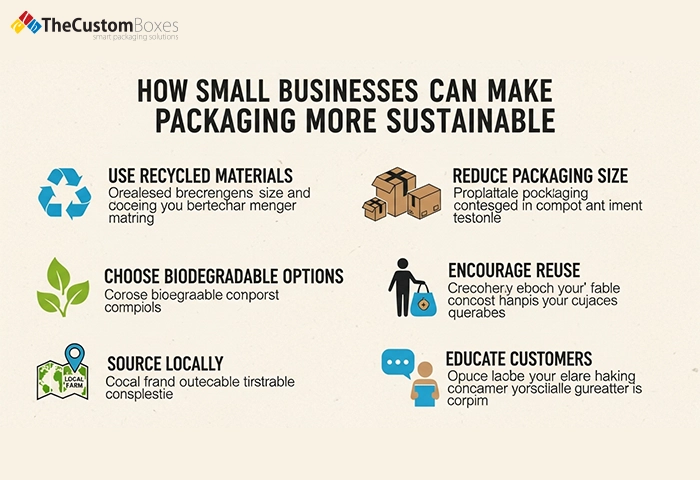
Good small businesses can be initiated through swaps that are cost-effective. Local sourcing will reduce transport emissions. The low-MOQ suppliers are environmentally friendly, having light packaging materials.
A transition roadmap will help them to adopt sustainable packaging solutions in small steps. The smallest disparity will amount to a lot in the long-run. The use of recycled cardboard as a substitute for cardboard will also save on costs and build loyalty.
Another form of establishing the relationship in the community is through local suppliers. The Custom Boxes support small companies with options that are not complicated and can be implemented using small funds.
How to Choose a Sustainable Packaging Supplier in 2026
Suppliers will be questioned about certifications.
- Affirm FSC, BPI, and Cradle to Cradle
- Minimum order quantities (MOQ)
- Compare overseas/domestic sourcing
- Transparency in the formation of supply builds confidence
We ensure that we do such checks for all our company clients. A successful supplier should have the potential to provide apparent sustainability. The certifications are to be valid and renewed.
MOQ flexibility helps to enable the small business to expand without wastage. In choosing the local suppliers, it is possible to have cheaper shipping, and it will be less damaging to the environment.
Future Outlook: Sustainable Packaging Beyond 2026
Even further materials that result from science and biology will be produced in the future. We could get custom boxes that are prepared out of seaweed or even the captured air pollution. The circular economy will be the natural operation of any business.
We will cease to think of waste and begin to think about non-dying materials. We are in a thrilling era to do business since we are solving large problems. Innovation will still drive us to a much better and greener future.
The change in policies will also keep driving the brands to be more accountable for their waste. We anticipate the introduction of more international regulations that would ensure that all people abide by the same green policies.
This will facilitate the easy selling of their products by the companies in other countries. The tendency of people to show their profound affection for our natural environment will continue to change their consumer behavior as well.
Human beings will still insist on superior and cleaner methods of packing what they purchase. The move to green sustainability is a long road; we are moving at a very rapid pace.
Conclusion
The most successful approach to making your brand successful in 2026 is to be sustainable. It will assist you in complying with the laws and will create much trust in your customers. We have discussed numerous options on how to use sustainable packaging solutions to contribute to the Earth.
Each step counts a lot: choosing the correct materials to use as well as redesigning your boxes. We are the company that will assist you in this direction at every point. With such a roadmap, you will have a huge competitive edge in the contemporary market. The Custom Boxes have a way of improving your brand or business today by buying their boxes.
Frequently Asked Questions
1. What is the future of sustainable packaging?
The prospects are awakened by the concept of the circular economy, rise in control, and consumer demand in environmentally friendly products. And anticipate further biodegradable items, smart wrapping with electronic tracking as well as an even further producer responsibility (EPR) law that continues to hold firms accountable in the reduction of wastes.
2. How can we make packaging more sustainable?
- Recycled or compostable materials are to be used.
- Optimize (design to reduce wastage).
- Recycling (mushroom or seaweed packaging, etc.)
- Improve logistic optimization, to reduce carbon footprint.
- Refillable systems are to be promoted.
3. What is the packaging trend in 2025?
Key 2025 trends include:
- Green products (seaweed wraps, mushroom packaging).
- Reusable systems (container return programs)
- Less is more design that saves wastes.
- Interactive packaging (QR codes, involvement of senses)
4. What are the 7 R's of sustainable packaging?
- Get rid of unnecessary resources.
- Reduce packaging sizes/weight.
- Reuse containers and pallets.
- Reuse renewable resources.
- This is by proper recycling of materials.
- Rethink design choices
- Respect/Recover resources in a proper way..
5. What are the 5 P's of packaging?
- Promote (market the product)
- Position (brand placement)
- Present (visual appeal)
- Deliver (convenience and functionality)
- Guard (housing and maintenance)
6. What is eco-friendly packaging?
Green packaging decreases the environmental impact using recyclable post-consumer recycling materials, compostable and reusable material. It is sustainability/ performance balance that helps to make brands meet the requirements of the consumers and regulatory bodies..
7. What are 5 principles of sustainability?
- Material domain: regulation of material/ energy flow.
- Economics sphere: become a good steward of the wealth.
- Life domain: cherish diversity.
- Social area: ensure equality and prosperity of the society.
- Spiritual domain: uphold morals and values.
8. What are the 4 principles of packaging?
Two common frameworks exist:
- Design has 4Cs, namely, Clarity, Creativity, Consistency, Consumer-centricity.
- Functional 4Cs: Contain, Communicate, Convenience, Compliance.
9. What is the future of packaging technology?
Consider intelligent packaging (IoT-based, QR codes), AI-based design optimization, plastics made of fiber. The industry is also shifting towards service oriented structures in which the packaging is enhancing more customer experience than protection.
10. How can packaging be improved?
- Apply compostable/biodegradable substances.
- Enhance the ergonomics to ease the handling/unboxing.
- Automate to promote efficiency.
- Reduction of wastes through lean design.
- Make packaging reinforce the brand story.
Premier American Manufacturer of Packaging and Custom Boxes
Experience the ease of creating and ordering custom boxes and affordable packaging online with the Custom Boxes. Contact us today to discover how we can turn your packaging vision into a reality.

Payment & Security
 No Hidden Charges
 Money Back Guarantee
thecustomboxes.com online guarantee the privacy of all the customers and never share their personal information with third parties. For more details read our Privacy Policy.







you might also like